All about boat sails: materials, uses and… a second life!
From the ocean to your home. Understand the technical side of nautical materials to better appreciate their transformation into art and design objects.
By OÈST Ateliers7 min read
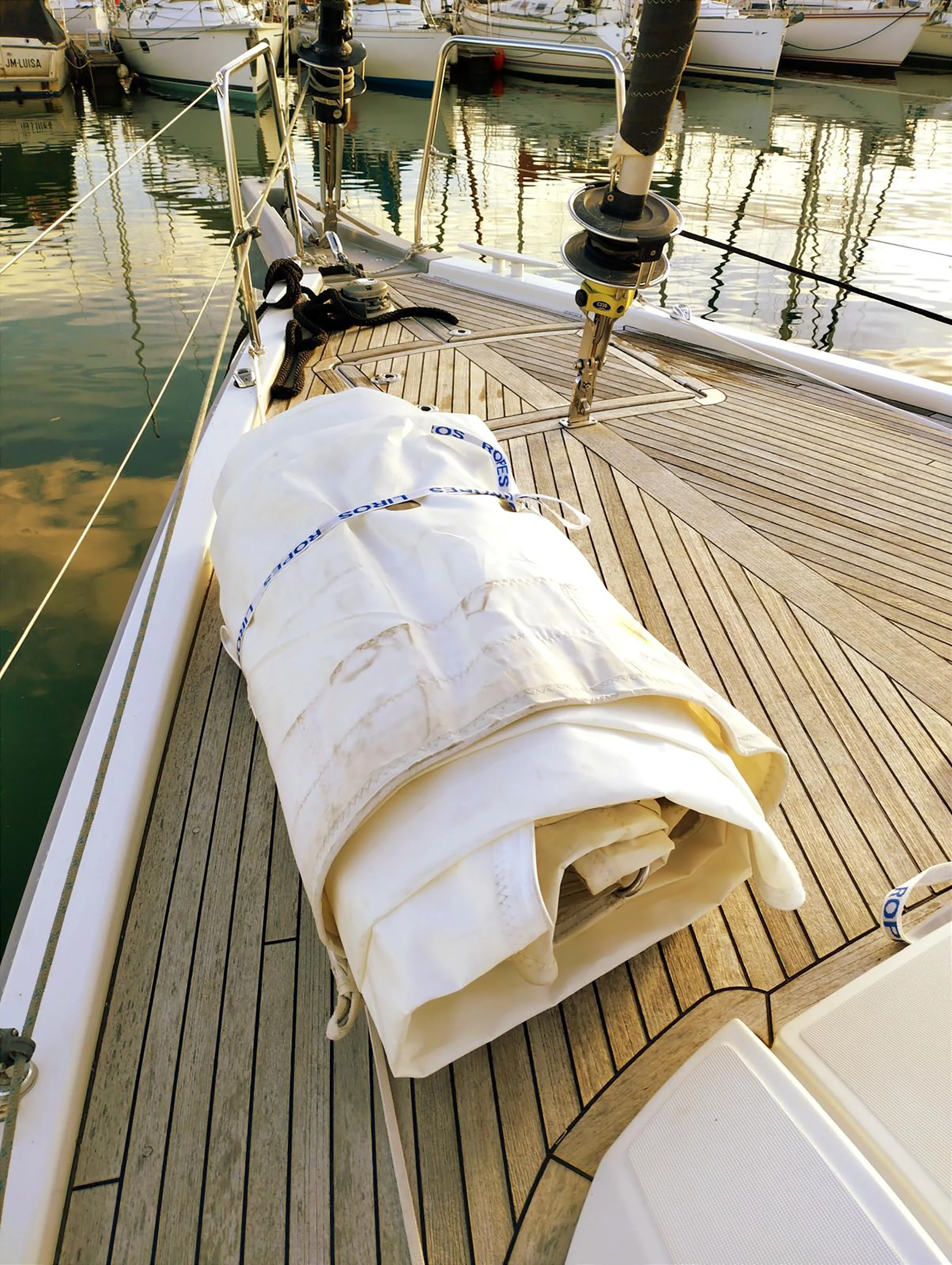
It snaps in the wind, swells under the spray, stands up to storms and has guided sailors for centuries. A boat sail is much more than a simple piece of fabric: it is the living engine of a ship, the link between people and the ocean. But do you really know what it is made of? And above all, do you know what becomes of it when its life at sea comes to an end? From its making to its rebirth in the hands of craftspeople, this article invites you to dive into the fascinating world of boat sails.
The different types of sailcloth and sails in sailing
Mainsail, jib, spinnaker: a sail for every wind
On a sailing boat, not all sails play the same role. The mainsail, hoisted on the main mast, is the centrepiece: it drives the boat in almost every wind condition. The jib, a triangular headsail, complements it by catching the airflow passing in front of the mast. Together, they form an essential duo for sailing both close-hauled and on a reach.
For downwind points of sail - when the wind blows from behind - the spinnaker is set: that brightly coloured balloon sail that fills like a bubble and offers an unrivalled feeling of speed. There is also the genoa (a larger jib), the gennaker and storm sails, designed to hold in the most extreme conditions. Each sail is designed for a precise wind range, a particular point of sail, a specific balance between power and control.
From historic cotton canvas to technical sails
For millennia, sails were woven from natural materials: linen, hemp, then cotton. These cloths, heavy and sensitive to moisture, required constant care - thorough drying after every outing, a permanent fear of mildew and tearing. Yet they had a soul, a texture, a warmth that sailors knew by touch.
Everything changed in the second half of the 20th century with the arrival of synthetic fibres. Polyester, then Kevlar, Mylar and carbon revolutionised sail construction. Lighter, stronger, impervious to water, these new boat fabrics pushed back the limits of nautical performance. They are cut, bonded and laminated with engineering precision. The poetry of cotton gave way to technical rigour.
What materials is a boat sail made of?
Dacron, king of the oceans
If a single material had to sum up the modern leisure sail, it would be Dacron - the trade name for woven polyester. It is the most widespread sailcloth in the world, and for good reason: it combines every quality a sailor looks for. Tough, dimensionally stable, resistant to UV and moisture, it keeps its shape under load without stretching out over the years of sailing.
Dacron can be recognised by its feel, both supple and firm, with a slight crispness under the fingers. Its white surface, sometimes slightly translucent, takes on the marks of spray and salt over time. Affordable to buy and long-lasting, it equips the vast majority of cruising and leisure yachts. It is an honest, faithful material that ages with the boat and carries years of sea within it.
Kevlar, carbon and Mylar: racing sails
At the other end of the spectrum are competition sails, designed not to last for years but to win tenths of a second. Kevlar - the golden aramid fibre also found in bulletproof vests - offers exceptional tensile strength for minimal weight. Carbon takes this logic even further: extreme stiffness, absolute lightness, but fragility when folded repeatedly.
Mylar, an ultra-thin polyester film, is often used together with these fibres in laminated constructions: several layers bonded together form a technical sail in which every millimetre is calculated. These high-performance materials allow racing crews to extract every available knot of wind. Their lifespan, on the other hand, is short: a few seasons of intense racing, and the sail loses its perfect aerodynamic shape. It is no longer fit for sailing... but it is far from dead.
These materials are designed to be almost indestructible in the face of the elements. But what happens when the sail, worn and misshapen, can no longer claim to drive a boat? That is where another story begins.
What to do with a boat sail at the end of its life? The environmental challenge
It is a question more and more sailors and boatyards are asking: what to do with old sails? The obvious answer - the bin - is also the worst. These technical fabrics, made of synthetic fibres that are sometimes blended or laminated, are not biodegradable. They do not fit into the standard plastic recycling streams. Left in a shed or buried in landfill, they can last for decades without breaking down.
The volume is considerable: every year, thousands of used sails are taken off boats in ports all over the world. From the Dacron of an old cruising sloop to the Kevlar laminates of a racing monohull, all these fabrics represent an extraordinary raw material - strong, waterproof, light - that deserves infinitely better than a premature end.
This is precisely where upcycling comes in: not recycling the material by melting or shredding it (which degrades its properties), but giving it a new life of equal or greater value by making the most of its intrinsic qualities. Turning a sail into an everyday object honours its strength, respects its history and avoids major environmental waste. Here, the circular economy takes on its full meaning, with needle and thread.
From the ocean to your living room: rebirth through craftsmanship
Working the raw material
Working sailcloth is no small matter. These materials, designed to withstand the harshest marine conditions, put up real resistance to anyone who tries to transform them. Ordinary sewing machines are not enough: you need industrial machines, reinforced needles and technical threads able to cope with thicknesses that can exceed several millimetres once reinforcements and hems are layered.
The cutting itself requires precision and experience. Sails are not flat rectangles: they are cut into curved panels, sewn with calculated camber to catch the wind. Giving this temperamental material a new shape means having a dialogue with it, understanding its constraints, working with - not against - its natural stiffness. The result: remarkably sturdy objects, with an honest texture and a strong character.
Sea scars that tell a story
What makes each recycled sail absolutely unique is what it carries within it. The reinforced eyelets at the tack, head or clew - the metal rings through which the lines run - bear witness to thousands of manoeuvres. The reinforcement stitching at the corners, the reef bands used to reduce sail area in strong winds, the small repairs made hastily at sea: every detail is a page from an invisible logbook.
The signs of wear, the slight fading caused by salt and sun, the marks left by the stays or spreaders: all of this makes up the living memory of the sail. Unlike a new, anonymous material, recycled sailcloth is a fragment of ocean brought back to land. The object born from it - whether a lamp, a basket or a bag - is not just a handcrafted creation. It is a legacy.
OÈST ATELIERS: Your boat sails transformed in the Landes
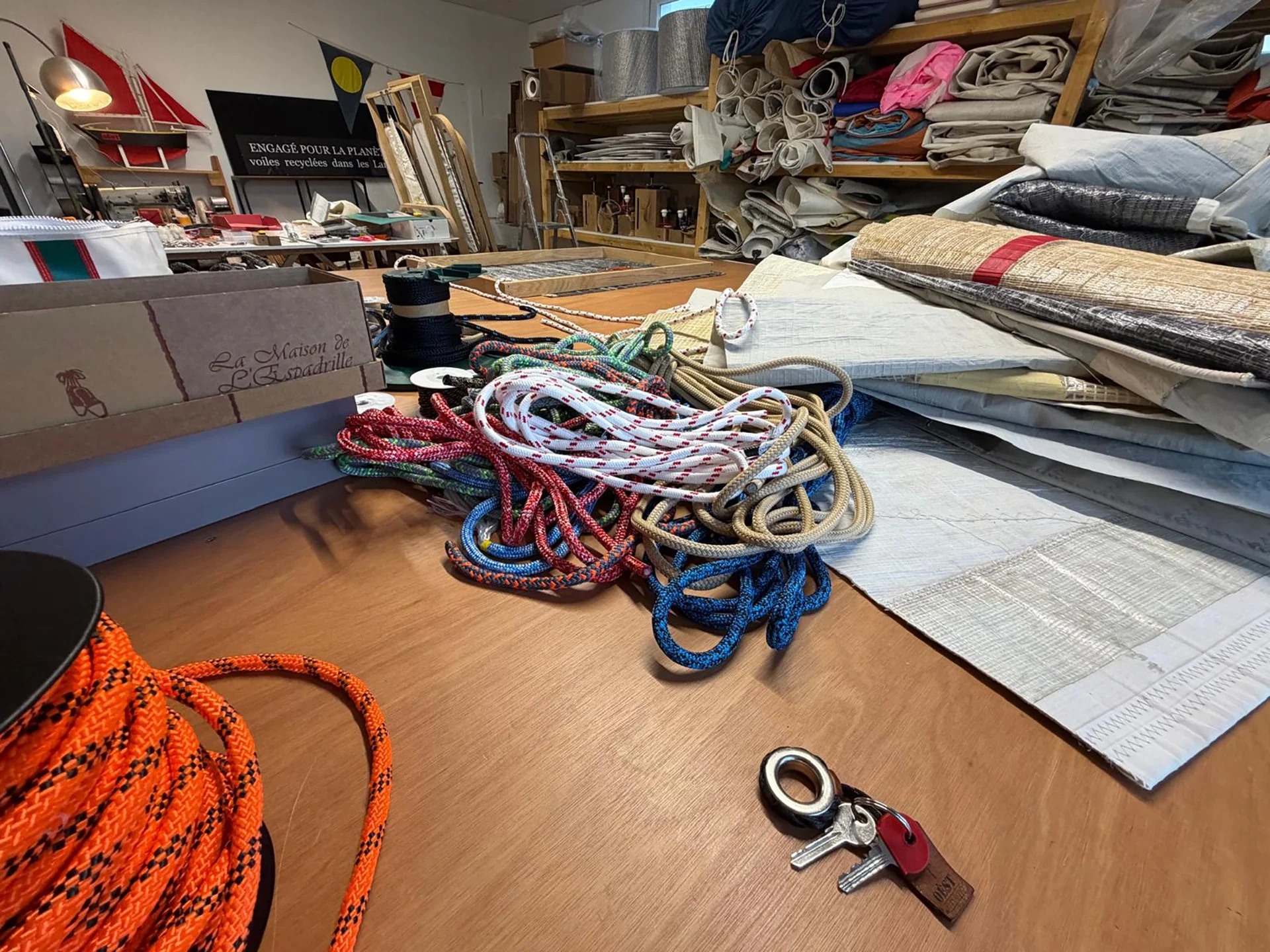
In our workshop in the Landes, between the pine forest and the Atlantic, we work these well-travelled sails with deep respect for their history. Every piece we make is born from a cloth that has braved the winds, weathered the spray and guided a crew. Our role is to extend that life with care and skill, making objects that combine the raw toughness of marine materials with a sober, contemporary aesthetic.
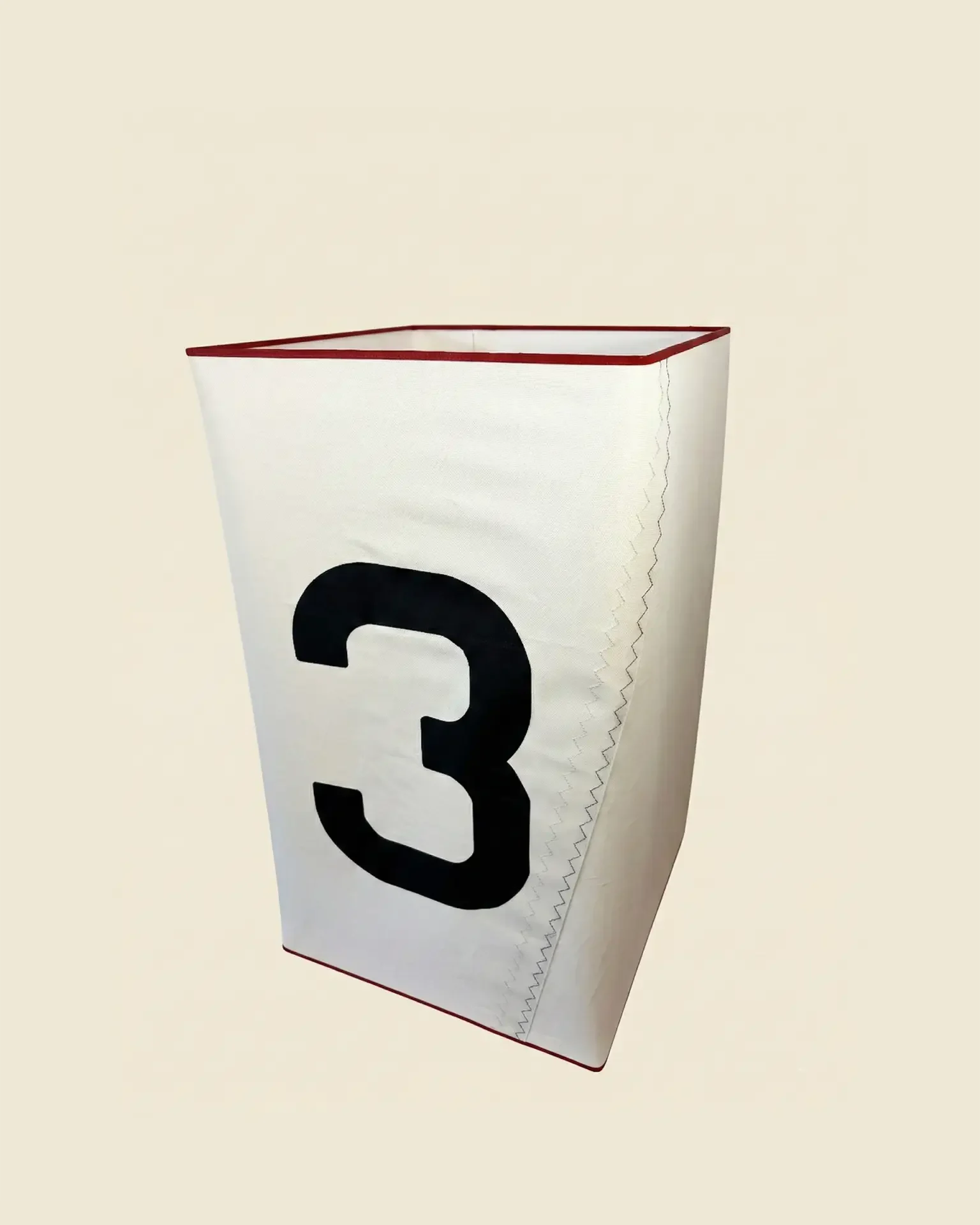
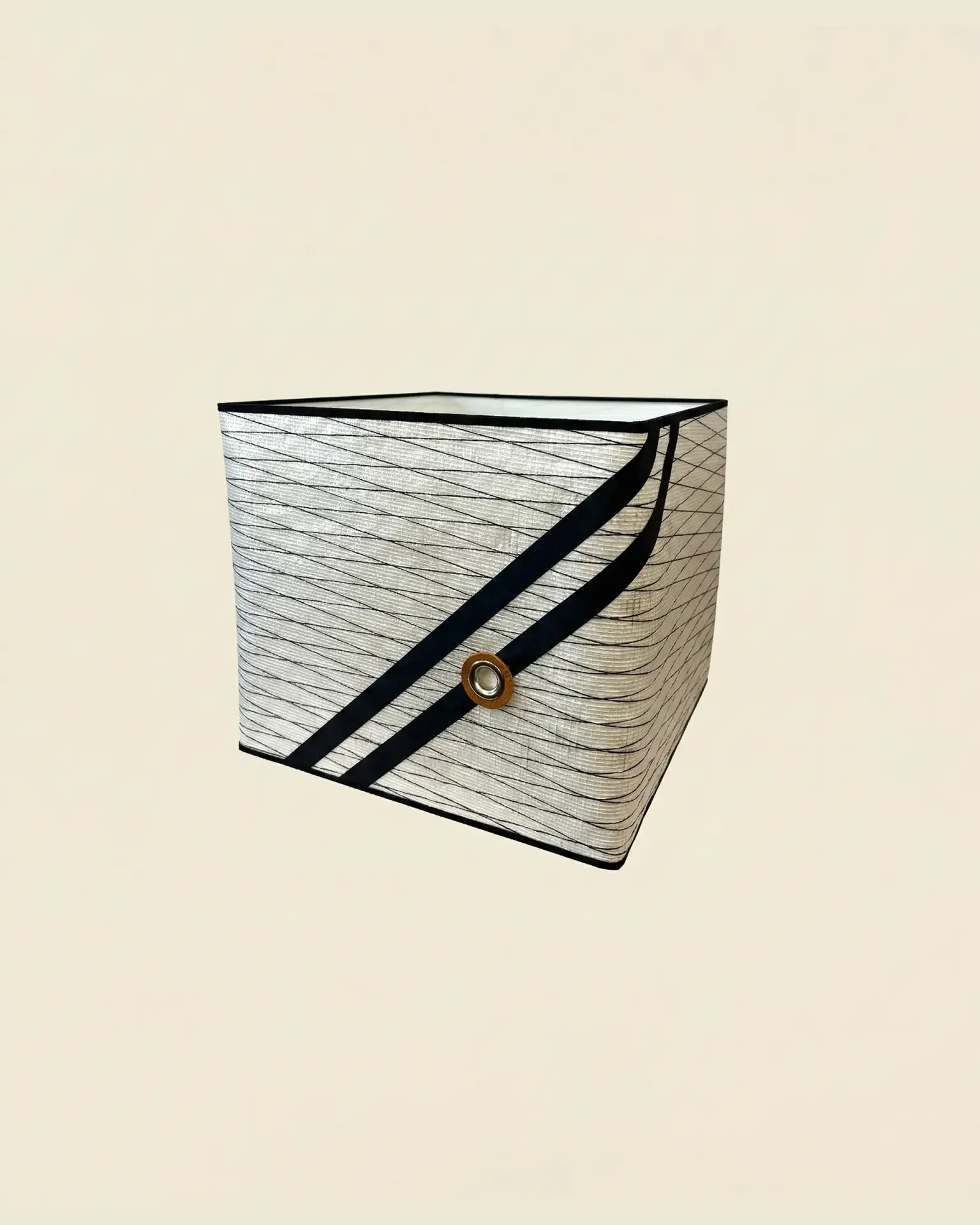
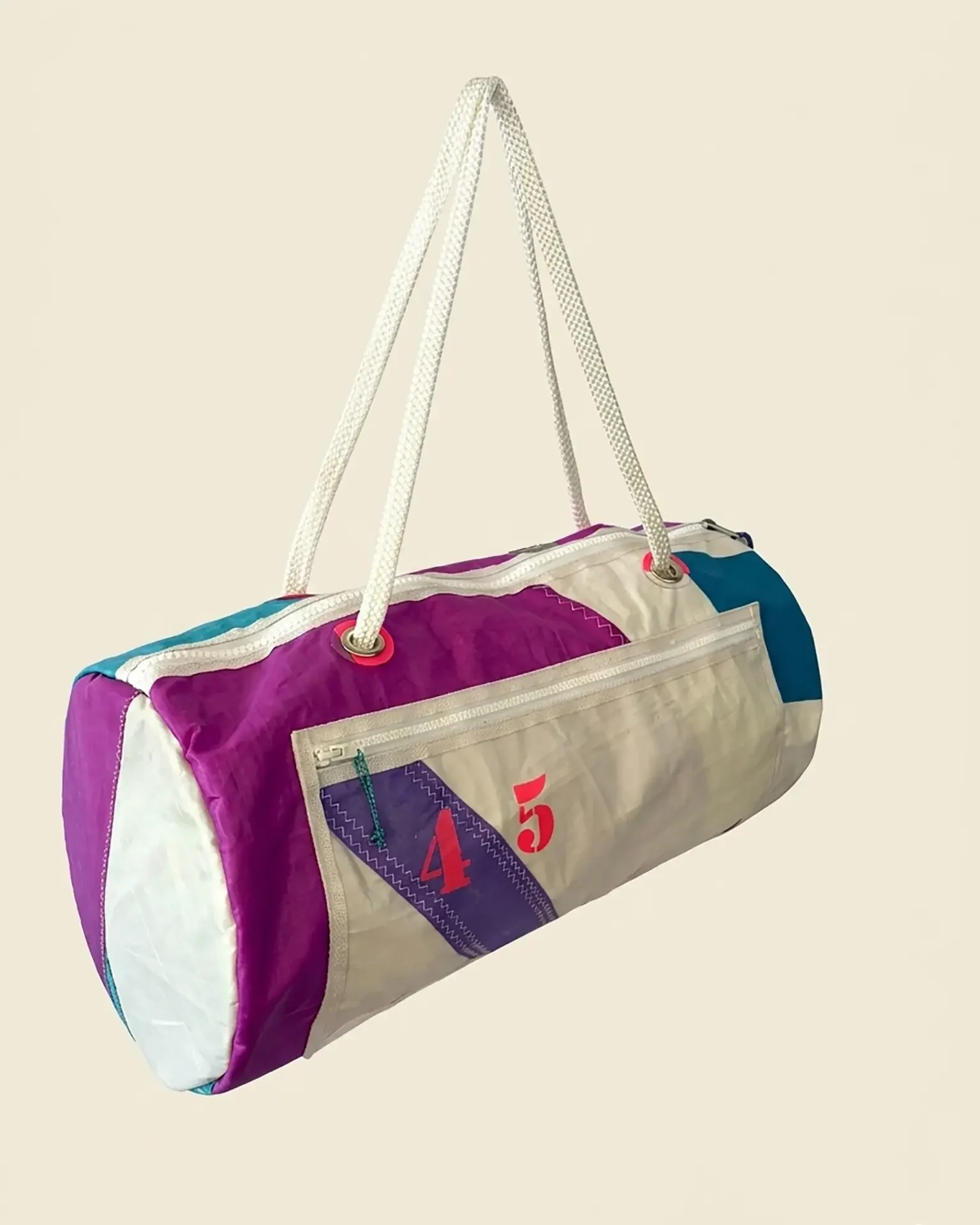
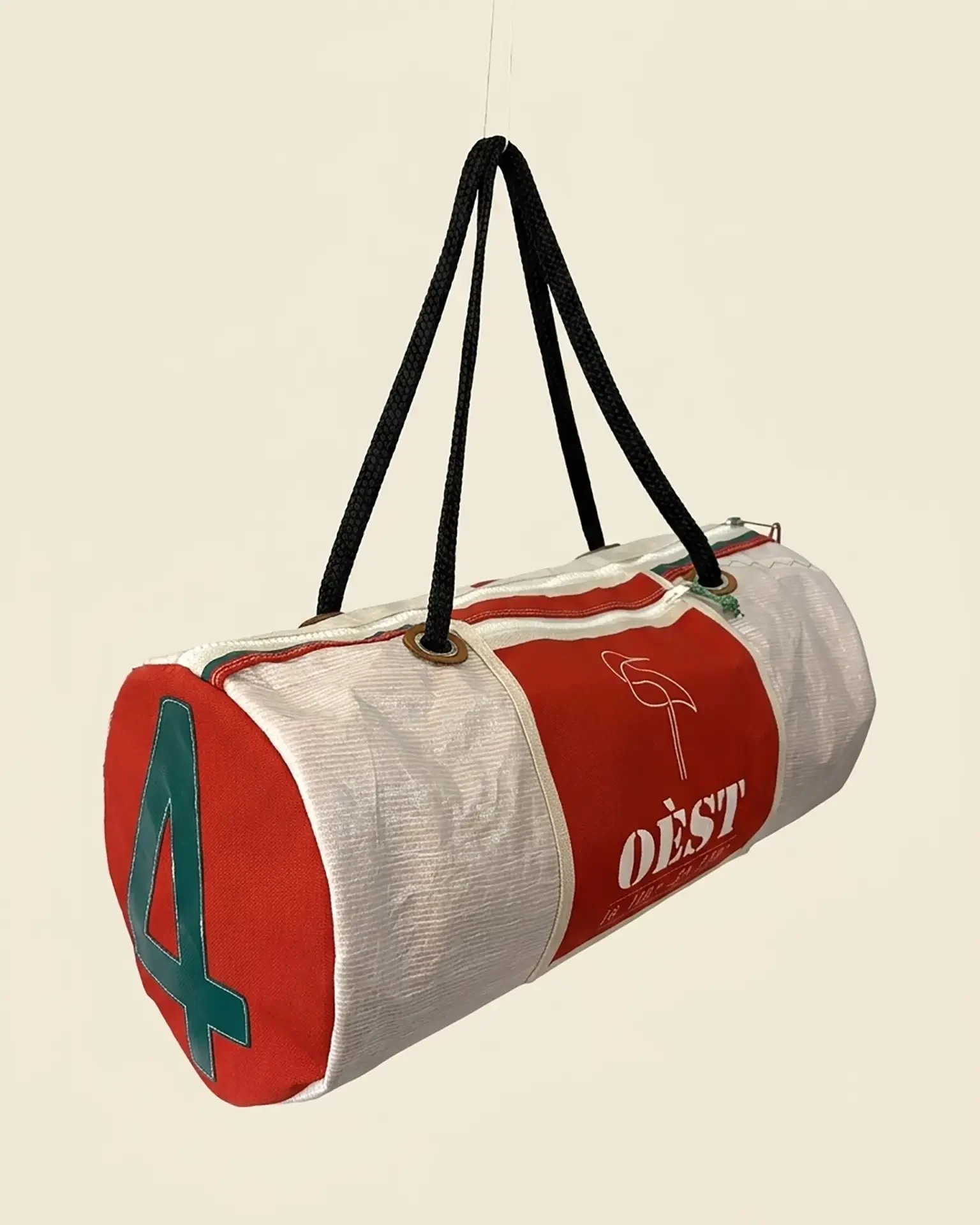
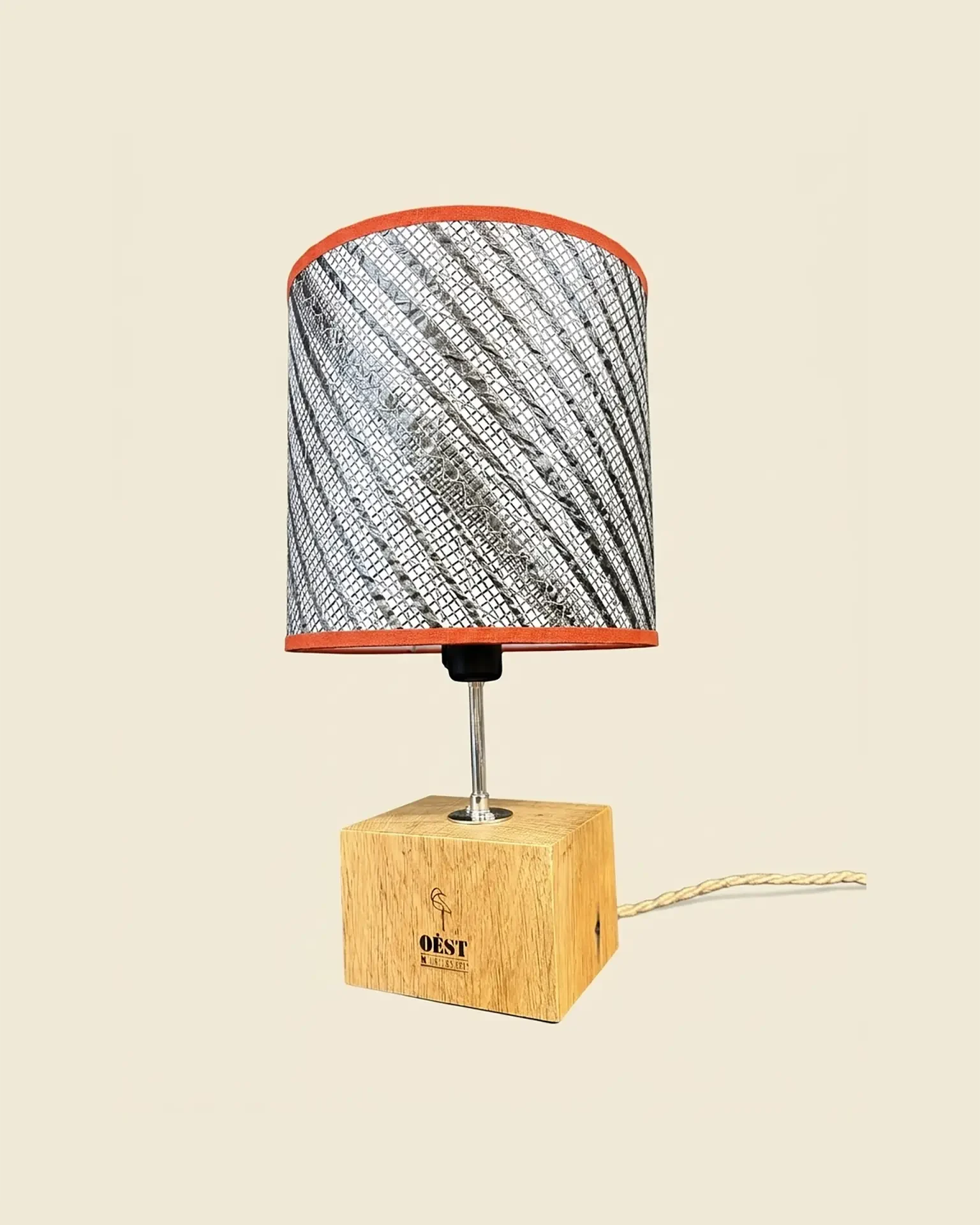
Our recycled sail bags and luggage draw on the natural strength of Dacron and technical sails to offer exceptional durability - with no compromise on style. Our pendant lights and lamps play with the particular translucency of these fabrics to diffuse a soft, almost marine light in your home. For professional or bespoke projects, we study each request with the same high standards.
Local roots are at the heart of our approach: the sails we transform come from ports on the Atlantic coast, our workshop is in the Landes, and every object is sewn here, by hand, with the machines and the attention these exceptional materials demand.
So, the next time you see a salt-bleached sail filling with wind, think about what it could become. A crossing is never forgotten - it is transformed.
Want to discover what an old racing sail can become in the hands of our craftspeople? Explore our creations and let yourself be surprised by the beauty of raw material.